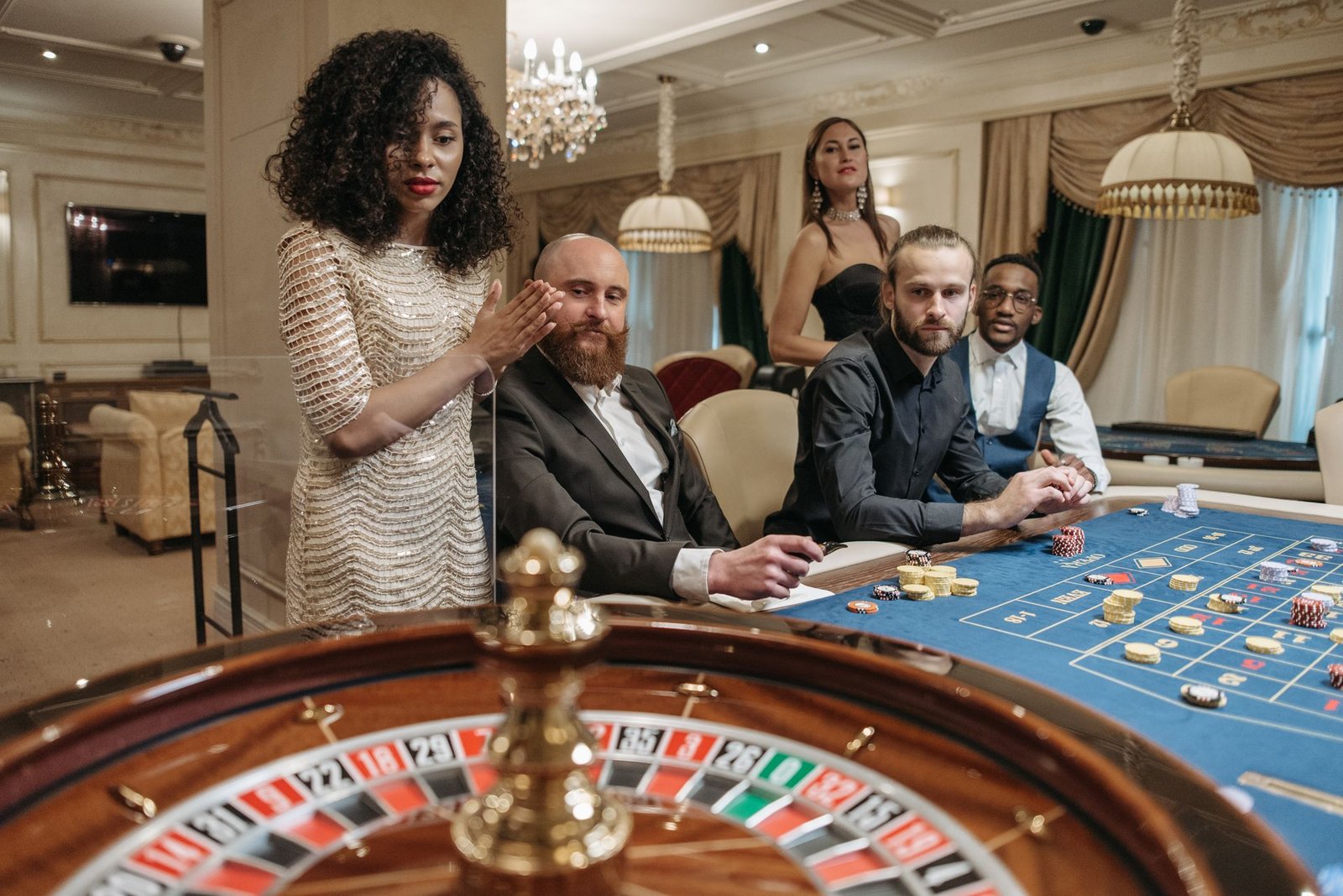


Walk across any casino floor, and you will hear the unmistakable clatter of an ivory ball bouncing over brass frets. Most casual tourists sit down at the first open table they spot without checking the green pockets. However, seasoned gamblers know that learning how to play European roulette is the easiest way to protect a bankroll.
The game looks deceptively simple on the surface. A dealer spins a numbered wheel in one direction and launches a small ball in the opposite direction. Your sole job is predicting which numbered pocket captures that ball when gravity finally wins.
Getting started online takes less than two minutes once your gaming wallet is funded. Many players rely on an American express card for rapid deposits before joining a live-dealer stream. After loading your chips, you simply place your wagers on the felt layout before the croupier announces no more bets.
The Single-Zero Advantage Over American Wheels
At a quick glance, European and American tables appear almost identical to the untrained eye. Both feature red and black pockets numbered 1 through 36 in a non-sequential order. Yet one tiny green detail completely changes your mathematical reality over a long evening.
European wheels contain 37 total pockets because they feature only a single green zero. Conversely, American wheels cram 38 pockets onto the rotor by adding an extra green double-zero slot. That single extra pocket nearly doubles the casino’s built-in mathematical edge against you.
“Choosing an American double-zero wheel when a single-zero table sits ten feet away is like handing the pit boss an extra twenty-dollar bill every hour just for the privilege of sitting down.”
On a standard European layout, the house edge sits at a respectable 2.70 percent across almost every wager. Meanwhile, that second green pocket pushes the American house edge up to a punishing 5.26 percent. Furthermore, the payout odds remain completely identical on both tables despite your worse probability of winning.
How La Partage Cuts the House Edge Even Further
Some upscale European tables offer an extra player-friendly rule called La Partage on even-money wagers. If you bet on red, black, odd, or even and the ball lands on zero, you do not lose your entire stake. Instead, the house immediately refunds half of your wager back to your stack.
Consequently, this single rule slashes the house edge on even-money bets down to a tiny 1.35 percent. Few table games on the casino floor offer better mathematical terms without requiring complex strategy charts. Therefore, always scan the table rules plaque before buying in.
Step-by-Step Guide to Place Bets and Play European Roulette
Understanding the physical rhythm of the table helps remove any beginner hesitation. Whether you join a sleek 2026 live-studio broadcast or a brick-and-mortar pit, every round follows the exact same sequence.
-
Exchange your cash or digital balance for colored non-value chips so the dealer can distinguish your wagers from neighboring players.
-
Place your chips onto your chosen numbers, lines, or outer boxes while the betting window remains open.
-
Watch the croupier spin the wheel and launch the ball along the upper track.
-
Keep placing or adjusting chips until the ball begins losing momentum and the dealer waves a hand over the layout.
-
Wait for the ball to drop into a pocket and watch the dealer place a glass dolly marker on the winning number.
-
Leave your winning chips untouched until the croupier clears losing bets and pushes your payout across the felt.
Never reach onto the layout while the glass marker is still sitting on the winning number. Dealers strictly enforce this etiquette to prevent accidental chip tampering during payouts. Once the dolly comes off the felt, the next betting round starts immediately.

Inside vs. Outside Bets on the European Felt
Every roulette layout divides into two distinct betting zones that balance payout size against hit frequency. Mixing these options lets you tailor the volatility of your session to match your mood.
High-Volatility Inside Wagers
Inside bets sit directly on the numbered grid in the center of the table. These wagers are harder to hit, yet they deliver massive payouts when your number connects.
-
Straight Up: Placing a chip cleanly inside a single number square pays 35 to 1.
-
Split Bet: Straddling the line between two adjacent numbers pays 17 to 1 if either hits.
-
Street Bet: Setting your chip on the outer edge of a three-number horizontal row pays 11 to 1.
-
Corner Bet: Placing a chip at the four-way intersection where four numbers meet pays 8 to 1.
-
Six Line: Straddling the outer intersection of two adjacent rows covers six numbers and pays 5 to 1.
Steady Outside Wagers
Outside bets wrap around the perimeter of the numbered grid and cover large chunks of the wheel at once. Beginners often prefer these spots because they keep a bankroll alive much longer.
-
Red or Black: Picking the winning pocket color pays even money at 1 to 1.
-
Odd or Even: Predicting whether the winning number is odd or even also pays 1 to 1.
-
High or Low: Betting on numbers 1 through 18 or 19 through 36 pays 1 to 1.
-
Dozens: Covering the first, second, or third group of twelve numbers pays 2 to 1.
-
Columns: Backing one of the three vertical twelve-number columns pays 2 to 1.
Notice that the green zero belongs to neither red nor black, nor does it count as odd, even, high, or low. Whenever zero hits without La Partage active, all standard outside wagers lose.
Practical Bankroll Habits When You Play European Roulette
Even with a 2.70 percent house edge, short-term variance can swing wildly over fifty spins. Walking up to the wheel with a clear plan separates relaxed entertainment from stressful chasing.
First, ignore progressive doubling systems like the Martingale strategy. Doubling your bet after every loss sounds foolproof in theory, yet a simple seven-spin cold streak will slam you straight into the table limit. Instead, use flat betting where every wager stays roughly two to three percent of your total session budget.
Second, avoid the temptation to track hot and cold numbers on the electronic scoreboard. Every spin of a balanced wheel is a completely independent physical event. The ivory ball has zero memory of hitting black six times in a row.
Finally, decide on a realistic win goal and a strict stop-loss limit before your first chip touches the felt. When you decide to play European roulette with discipline, you get maximum table time, fairer odds, and a far better shot at walking away ahead.